
Common Real Estate Law Misconceptions
Buying or selling a home is one of the largest financial decisions many people make. With so much involved, homebuyers and sellers benefit from making choices based on reliable legal information instead of assumptions that may not apply to their situation. Misunderstandings about real estate law can lead to avoidable delays, disagreements, and costly surprises.
At Palmer Law, LLC, I help clients in Cary, IL, approach residential closings with a clearer understanding of the legal issues involved. Every transaction has its own facts, but recognizing several common real estate misconceptions can help you protect your interests and move forward more confidently.
Real Estate Agents and Attorneys Serve Different Purposes
A frequent misconception is that a real estate agent can handle every part of a property transaction, including its legal aspects. Agents play an important role in helping buyers and sellers understand the market, negotiate offers, coordinate details, and work toward a timely closing.
A real estate attorney has a separate and equally important role. As an attorney, I focus on the legal side of the transaction, including reviewing or preparing contracts, evaluating title concerns, identifying legal risks, addressing disputes, and helping clients comply with applicable requirements. Agents and attorneys can work together effectively, but their responsibilities and areas of knowledge are not the same.
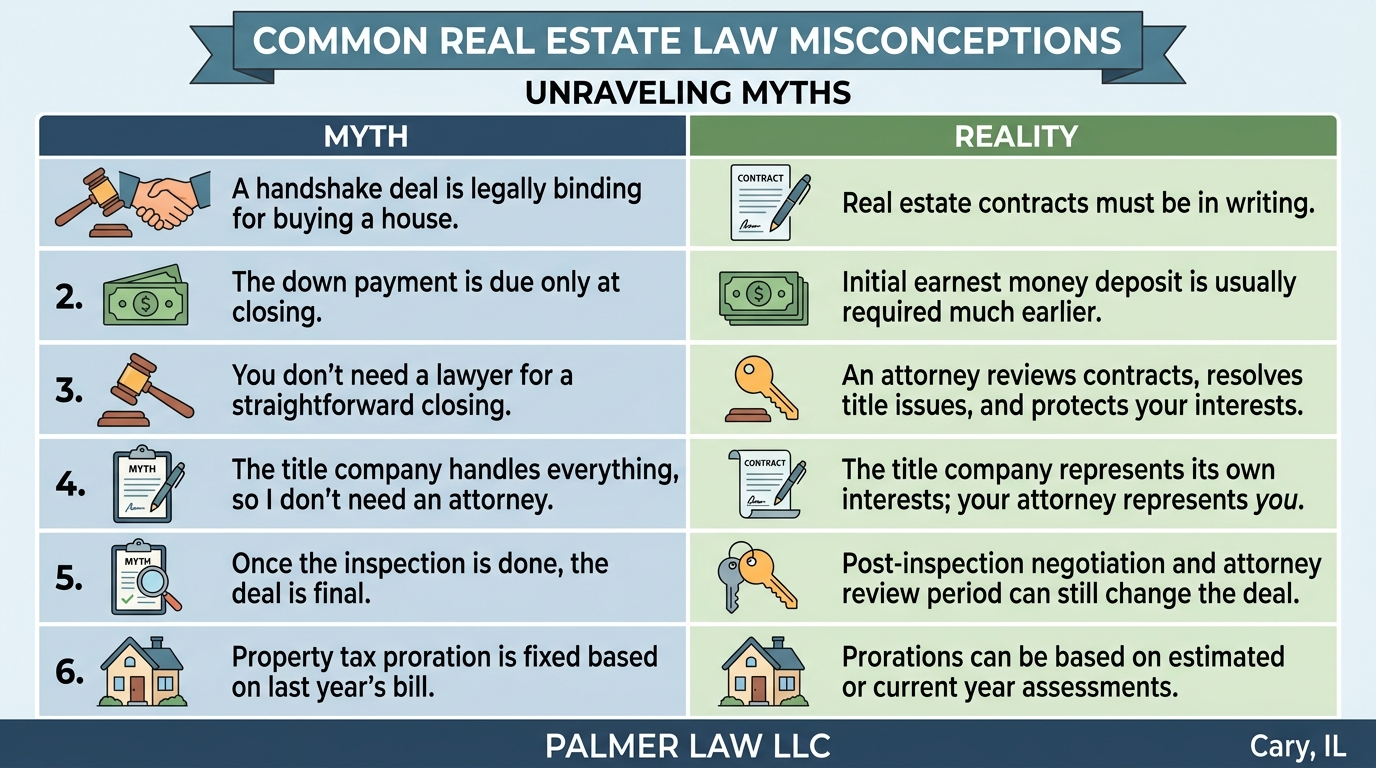
Verbal Promises Are Not a Substitute for Written Agreements
Some parties believe that a spoken understanding is enough to resolve an important point in a real estate deal. Relying on a verbal promise, however, can create serious difficulty if there is later confusion about what was said, when it was agreed upon, or who was responsible for a particular obligation.
A written real estate contract establishes the terms of the transaction in a form both parties can reference. It identifies responsibilities, deadlines, contingencies, and other key details. Having Palmer Law, LLC review important documents can help ensure that the written agreement accurately reflects the understanding of the homebuyers and sellers involved.
Standard Contracts Still Require Individual Review
Another common belief is that all purchase agreements are essentially alike, particularly when a familiar or standard form is used. Although many contracts contain similar provisions, each residential closing involves its own property, financing arrangements, deadlines, contingencies, and goals.
Even a seemingly minor change in wording can have meaningful legal or financial consequences. Terms may vary based on the type of property, the parties' expectations, local requirements, and the particular circumstances surrounding the sale. A careful review by a real estate law attorney can help identify provisions that may not serve your interests, explain unfamiliar terms, and address concerns before you sign.
Not Every Property Issue Is Found Before Closing
It is easy to assume that all concerns affecting a property will be discovered before the transaction is complete. Sellers generally have disclosure obligations regarding certain known issues, but a disclosure does not guarantee that every problem will be identified during the process.
Defects, title matters, boundary disagreements, zoning limitations, and other legal concerns may not become clear until later. That is why due diligence matters so much for homebuyers. Inspections, title review, and close attention to transaction documents can help reveal potential problems before they turn into expensive issues after closing.
Real Estate Requirements Depend on Where the Property Is Located
Real estate laws are not uniform in every location. Requirements can differ from state to state and may also vary between local jurisdictions. A process or document that is appropriate in one area may not satisfy the rules that apply elsewhere.
Contract requirements, seller disclosures, closing procedures, and related obligations can all depend on the location of the property. Working with a Cary, IL, law firm that understands the laws relevant to your transaction can help reduce the risk of compliance concerns and avoidable delays. Palmer Law, LLC provides legal services designed to help clients understand the requirements affecting their residential closings.
Zoning Rules Can Affect Your Plans for the Property
Buyers sometimes assume zoning rules will not matter once they own the property. In reality, zoning regulations can shape how a property may be used, changed, expanded, renovated, or developed over time.
Before buying, it is important to consider zoning restrictions if you expect to make improvements, change the use of the property, or pursue future development. Failing to review these rules in advance may result in added expense, unexpected obstacles, or limitations that conflict with your plans. Understanding zoning requirements before closing allows buyers to make better-informed decisions.
Make Decisions With Reliable Legal Guidance
A real estate transaction involves more than agreeing on a price for a home. It also requires close attention to contracts, title matters, property conditions, local rules, and the many details that can affect a closing.
When buyers or sellers rely on common myths rather than accurate information, they may increase the chance of unnecessary complications. Taking the time to understand the legal aspects of a transaction can make an important difference.
Whether you are purchasing your first home, selling residential property, or handling a more complicated matter, Palmer Law, LLC can provide informed, accessible legal guidance. If you have questions about a purchase, sale, contract, title issue, zoning concern, or another real estate law matter in Cary, IL, contact my office to discuss your situation with an attorney.